Choosing the right wardrobe doors can transform how your bedroom functions and feels. Whether you’re setting up a new home or renovating your current space, the decision between a sliding door wardrobe and a hinged door wardrobe matters more than you might think. Indian bedrooms often come with space constraints, making it essential to know how to plan modular wardrobe for small bedroom India. This guide breaks down everything you need to know about both door types, so that you can pick the best modular furniture solution for your home.
Understanding Hinged and Sliding Wardrobe Doors
What Are Hinged Wardrobe Doors?
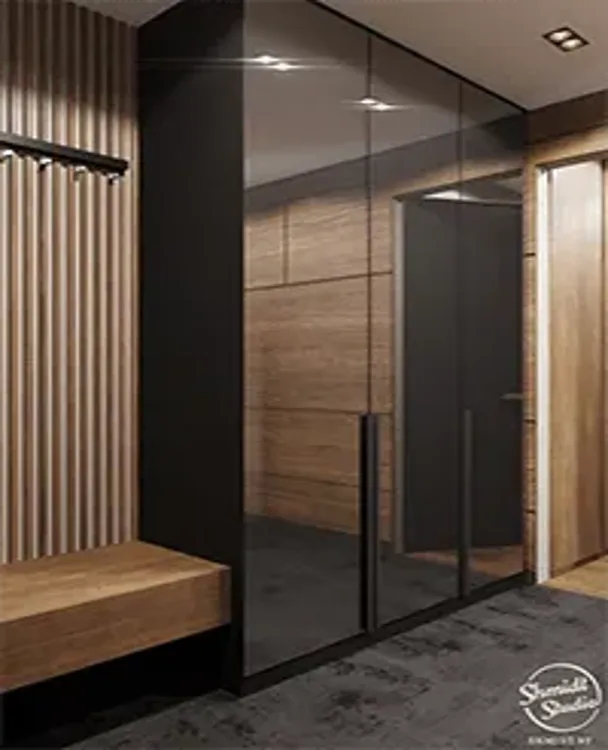
Hinged wardrobe doors represent the classic design approach. These doors attach to the frame with hinges and swing outward when opened. You need clearance in front, typically 600-700mm (approximately 2-2.5 feet), for full access. The doors open at a 90-degree angle but can swing wider depending on the hinge type.
Most hinged wardrobes come in 2-door or 4-door configurations. You can customize them in any material: BWR plywood with laminate, veneer, high-gloss acrylic, or solid wood panels. The design flexibility extends to panel detailing, carved profiles, high-gloss lacquer, solid teak doors, and glass inserts.
When you open both doors, everything inside becomes visible at once. Shelves, rails, drawers—all of it sits right in front of you. This complete visibility proves particularly useful during busy mornings when you need to sort through school uniforms or formal wear quickly.
Hinged doors operate on a simple mechanism. Soft-close hinges from brands like Hettich or Häfele need almost no attention for the first 8-10 years. If a hinge fails, replacement takes 10 minutes and costs very little. The simplicity of this hardware translates to lower upfront costs. A comparable hinged setup typically runs 20-35% less than a sliding wardrobe of the same size.
What Are Sliding Wardrobe Doors?
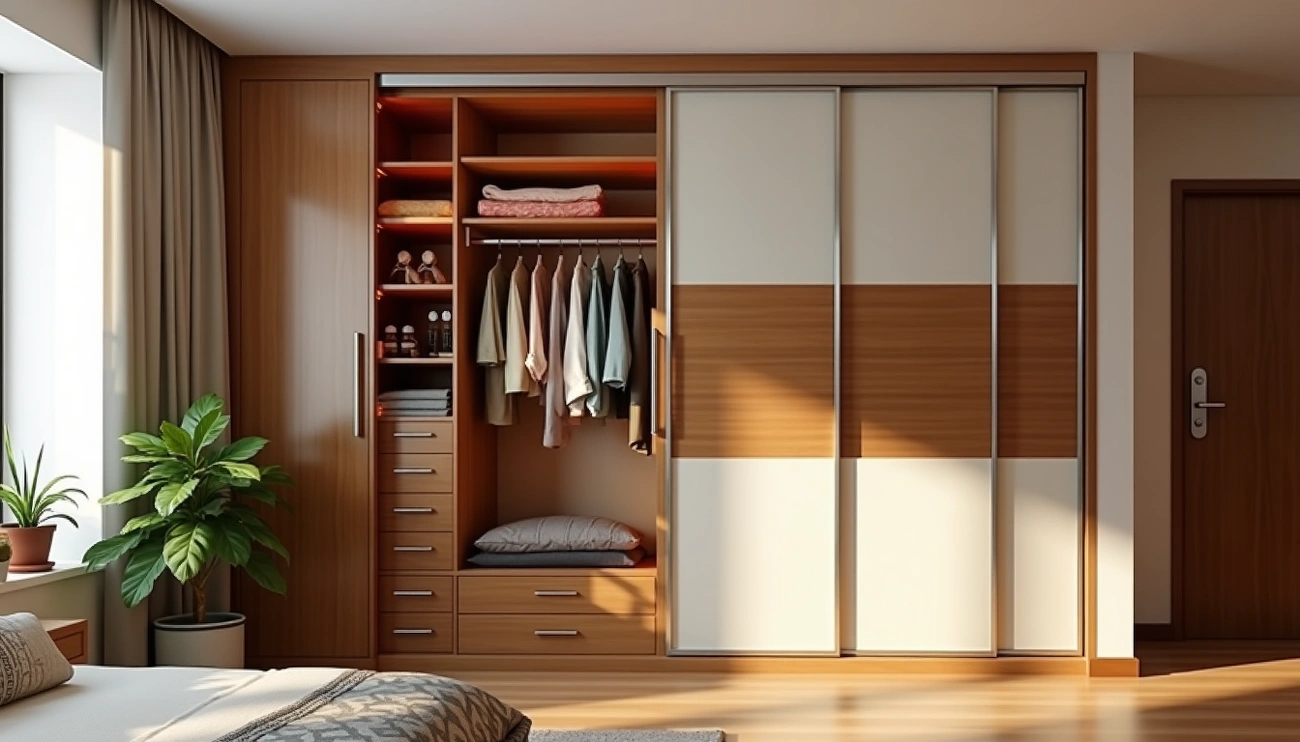
Sliding wardrobe doors glide horizontally along aluminum tracks. The panels overlap rather than swing outward, so no floor clearance is needed in front. The system relies on tracks mounted at the top and/or bottom of the unit, with doors sliding along these tracks through sliding carriages attached to them.
Most sliding wardrobes come in 2-track or 3-track configurations. A 2-track system opens roughly 50% of the wardrobe at a time, while a 3-track system opens about 66%. This difference affects how you access your storage daily.
The doors can carry substantial weight. Quality sliding systems support doors up to 120 kg. This weight capacity allows for full-length mirror panels without strain on the mechanism. Sliding doors balance excess weight on horizontal sliders, distributing it across the doors rather than placing vertical stress on hinges.
Floor-to-ceiling sliding wardrobes create a clean, unbroken wall effect. This consistent shutter finish reads as a design feature rather than just storage furniture. Mirror-finish sliding shutters work particularly well in rooms under 110 sq ft, visually opening up the space.
Key Differences at a Glance
Access patterns differ significantly. Hinged doors open completely, giving you a full view of everything stored inside. Sliding panels always have one section covered by another. When two people use the same wardrobe simultaneously, sliding panels let both access different sections without a door blocking the way.
Space requirements vary. Hinged wardrobes need 600-700mm clearance, which becomes significant in a 10×10 bedroom. Sliding wardrobes need zero clearance in front.
Cost structures diverge. Hinged wardrobes cost less upfront due to simpler hardware. Sliding systems need quality tracks, rollers, and aluminum profiles. Budget hardware leads to jamming and noise within a few years.
Maintenance demands contrast. Sliding tracks collect dust, especially in Indian cities. The tracks require periodic cleaning to prevent dirt or dust from obstructing smooth movement. Hinged hinges are simpler to clean and cheaper to replace when needed.
Design esthetics serve different purposes. Sliding wardrobes deliver a clean, flat wall effect with floor-to-ceiling panels. Hinged wardrobes offer more design customization, particularly for traditional or transitional styles.
Space Requirements and Room Layout
Floor Space Needed for Hinged Doors
Hinged door wardrobes demand clearance that extends beyond the frame itself. You need at least 60cm of unobstructed space in front for the doors to swing open comfortably. Depending on door width and opening angle, this clearance can stretch to 90cm. Some installations work with a minimum of 50cm, though this restricts full access.
The depth measurement matters equally. Standard hinged wardrobes measure 24 inches deep. Beyond this, hinged systems require plinth clearance above the skirting level. This adds another 100mm at the bottom, consuming floor area that sliding systems skip entirely.
Room configuration becomes critical when you place wardrobes on opposite walls. Maintain 54-60 inches of clearance between them. This spacing ensures you can walk past even when one wardrobe door stands open. For single-wall installations, a minimum 3-foot clearance allows comfortable use.
Check that opening doors won’t collide with beds, tables, or room entry points. Measure outward from the wardrobe location before finalizing the purchase.
How Sliding Doors Save Space
Sliding door wardrobes eliminate the swing clearance requirement completely. The panels glide horizontally along tracks, demanding no floor space in front. This single feature transforms how you arrange furniture in compact rooms.
The depth specification differs slightly. Sliding systems need 26 inches, which includes a 2-inch running track. This prevents clothes from catching when panels move. Unlike hinged models, sliding wardrobes skip plinth clearance. The tracks mount directly, giving you extra drawer space at the bottom.
You can position furniture closer to sliding wardrobes without blocking access. Beds, study desks, or dressers can sit just 60cm away. In contrast, hinged models would require nearly double that distance.
Best Door Type for Small Indian Bedrooms
Small Indian bedrooms benefit most from sliding door wardrobes. Urban apartments and compact room layouts rarely accommodate the swing radius hinged doors demand. Sliding panels keep walkways clear and room movement unrestricted.
Mirrored sliding panels add a functional advantage. They eliminate the need for separate dressing mirrors while making rooms appear larger. For bedrooms under 110 square feet, this visual expansion proves valuable.
Hinged wardrobes suit larger rooms where floor space isn’t constrained. They work best when you have adequate area for doors to open without disrupting daily movement patterns.
Planning Wardrobe Placement in Your Room
Measure your room’s narrowest dimension first. This determines whether swing clearance fits your layout. In rectangular bedrooms, position hinged wardrobes along the shorter wall to preserve length for movement.
For sliding installations, wall-to-wall placement maximizes storage without eating into circulation space. Corner L-shaped configurations work well, freeing the room center for traffic flow.
Consider furniture you already own. Place heavier items at hip height to reduce strain during use. If you rent, freestanding modular furniture offers upgrade flexibility without permanent installation.
Measure twice before ordering. Account for door frames, tight corners, and stairwell widths along the delivery path. Rooms may have adequate floor space yet impossible access routes.
Accessibility and Daily Usage
Full Wardrobe View with Hinged Doors
Hinged doors swing wide to reveal everything stored inside. You can open multiple panels simultaneously, creating an instant panorama of your entire clothing collection. This complete visibility matters most during busy mornings when you need to coordinate outfits quickly.
For couples sharing a wardrobe, this full access proves more convenient. Both people can see different sections without repositioning doors. You spend less time searching and more time getting ready. Everything from formal wear to accessories sits clearly displayed.
The 90-degree opening angle provides unobstructed access to every shelf, rail, and drawer inside. You don’t need to shift panels back and forth to reach items stored in different zones. This straightforward functionality reduces frustration during rushed mornings when every minute counts.
Partial Access with Sliding Panels
Sliding door wardrobes operate differently. One panel always covers part of the wardrobe, restricting your full inside view. If you open the left section, the right section stays closed due to door placement. During busy mornings, this limitation can feel restrictive.
However, sliding panels offer a practical advantage for shared wardrobes. Multiple panels allow two people to access separate sections simultaneously without blocking each other’s way. One person reaches their hanging clothes while another accesses drawers, both working independently.
The switching between sections happens quickly and effortlessly. You simply slide the panel across the track to reveal the next zone. For larger wardrobes with organized internal layouts, this partial access rarely disrupts daily routines. Position frequently used items in easily accessible zones to minimize panel shifting.
Door-Back Storage Options
Hinged wardrobe doors create additional storage opportunities. You can install hooks, pockets, or racks on the inside surface of shutters. These work well for accessories like ties, belts, clips, and scarves.
Over-the-door organizers maximize this vertical space. Narrow metal baskets hold small items without adding bulk. Shoe bags with clear pockets keep winter accessories sorted and visible. The back surface provides roughly 21 square feet of unused real estate per door.
Sliding doors don’t support this storage method. The panels glide along tracks, leaving no stable surface for hanging organizers. Everything must fit within the main wardrobe compartments.
Which Type Works Better for Your Morning Routine
Your morning habits determine which door type serves you better. If you prefer seeing all clothes at once when getting dressed, hinged doors deliver that experience. The complete view helps coordinate outfits faster and reduces decision fatigue.
Sliding doors work well when multiple family members share the wardrobe and need simultaneous access. Children accessing their school uniforms while parents sort work clothes creates less conflict with sliding panels. Each person operates independently within their designated section.
Consider how often you reorganize clothes. Hinged doors make seasonal sorting easier since you see everything together. Sliding systems require more patience when rearranging multiple zones across hidden sections.
Cost Comparison and Budget Planning
Budget considerations often determine which wardrobe doors fit your home renovation plans. The price gap between sliding and hinged options affects both immediate expenses and future costs.
Initial Installation Costs
Sliding wardrobes carry higher upfront costs than hinged alternatives. The price difference typically ranges from 15 to 25 percent more for sliding systems. This gap exists because of the track mechanisms, precision rollers, and thicker panels needed to support sliding functionality.
For a standard 7-foot wide wardrobe in mid-range materials, hinged versions cost approximately ₹45,000 to ₹80,000. A sliding version of the same wardrobe runs ₹55,000 to ₹1 lakh. Basic fitted wardrobes with two swing doors start from ₹53,000, while sliding door configurations begin at ₹1,10,000.
Hinged wardrobes start 20 to 30 percent below equivalent sliding models. The simpler mechanisms, standard fittings, and flexible sizing reduce production complexity. Installation proves more straightforward, requiring just hinge attachment to the frame rather than precise track alignment.
Hardware and Track System Pricing
Track systems drive up sliding wardrobe costs significantly. Quality sliding hardware includes aluminum tracks, precision rollers, and soft-close mechanisms. For standard laminated plywood doors, sliding rollers need at least 50kg capacity per door. Heavy solid wood shutters require tracks supporting 100kg to 125kg to prevent premature wear.
Professional installation charges for sliding systems range from ₹300 to ₹1,500, depending on door size, material type, and installation complexity. Track and hardware components alone add ₹1,000 to ₹2,000 to the total.
Hinged hardware costs less across the board. The materials and hardware for hinged doors typically remain less expensive due to fewer moving parts.
Long-Term Maintenance Expenses
Sliding systems require periodic track cleaning and may need roller replacement after 8 to 10 years. These maintenance interventions add to lifetime ownership costs. In contrast, hinged doors demand minimal upkeep. The most common maintenance involves occasional hinge adjustments.
Hinged mechanisms prove less prone to wear and tear, reducing the need for repairs over time. This durability translates to lower long-term expenses beyond the initial purchase.
Cost per Square Foot in Indian Market
Sliding wardrobe doors in Indian metros range from ₹720 to ₹800 per square foot. These rates apply to lacquered glass panels with aluminum frames. The cost gap narrows at premium price points. In high-end wardrobes with PU-coated shutters and soft-close fittings, the difference between sliding and hinged drops to just 10 percent. Hardware and track systems become a smaller proportion of total cost when materials themselves carry premium pricing.
Maintenance and Durability in Indian Climate
Indian climate conditions influence how hinged door wardrobes and sliding door wardrobes perform over time. Maintenance requirements differ substantially between both mechanisms.
Hinge Maintenance Requirements
Apply silicone spray or light machine oil to hinges every few months. Open and close doors several times to distribute lubricant evenly. Check screws monthly and tighten any that have loosened. Quality hinges from Hettich or Blum handle 50,000 to 80,000 cycles, lasting 35 to 55 years theoretically. Replacement costs just ₹200 to ₹500 when needed.
Track Cleaning and Lubrication Needs
Sliding wardrobe tracks demand weekly cleaning with a soft brush or vacuum. Dust accumulation happens faster in Indian cities, particularly Delhi, Jaipur, and Ahmedabad. Apply silicone lubricant monthly to tracks and rollers. Clean thoroughly every three to four months to prevent doors from feeling stiff. Skip this routine and rollers wear unevenly, causing panels to jump or jam.
Humidity and Monsoon Impact
High humidity causes wood-based materials to absorb atmospheric moisture, resulting in dimensional changes of 2-4mm across joints. Consequently, doors may swell and rub against frames. BWR plywood resists moisture in coastal cities like Mumbai, Chennai, and Kochi. Standard MDF swells when water penetrates, causing doors and drawers to jam. Mold growth appears on untreated MDF within 5-7 days at 90% humidity.
Expected Lifespan of Each Type
Both modular wardrobe types last 12 to 15 years when built with quality materials. Hinged mechanisms outlast sliding systems slightly due to simpler construction. Quality hinges function for the wardrobe’s entire lifespan without replacement. In contrast, sliding rollers typically need replacement after 8 to 10 years.
Common Problems and Easy Fixes
Hinged doors: Tighten loose screws with a screwdriver. Apply lubricant to eliminate squeaky hinges. Remove rust with steel wool and rust remover.
Sliding doors: Vacuum tracks to clear stuck panels. Straighten bent tracks with pliers or replace damaged sections. Tighten loose screws around frames and wheel assemblies.
Conclusion
The sliding versus hinged wardrobe debate doesn’t have a universal winner. Your room size, budget, and daily habits determine which works best. Therefore, if you’re working with a compact bedroom under 120 square feet, sliding doors save precious floor space. Similarly, shared wardrobes benefit from sliding panels that let multiple people access different sections simultaneously.
Hinged doors suit larger rooms where you value complete visibility and lower costs. The 20-30% price advantage and simpler maintenance make them practical for budget-conscious renovations.
Measure your clearance space first, then evaluate how you actually use your wardrobe daily. That combination reveals your answer.