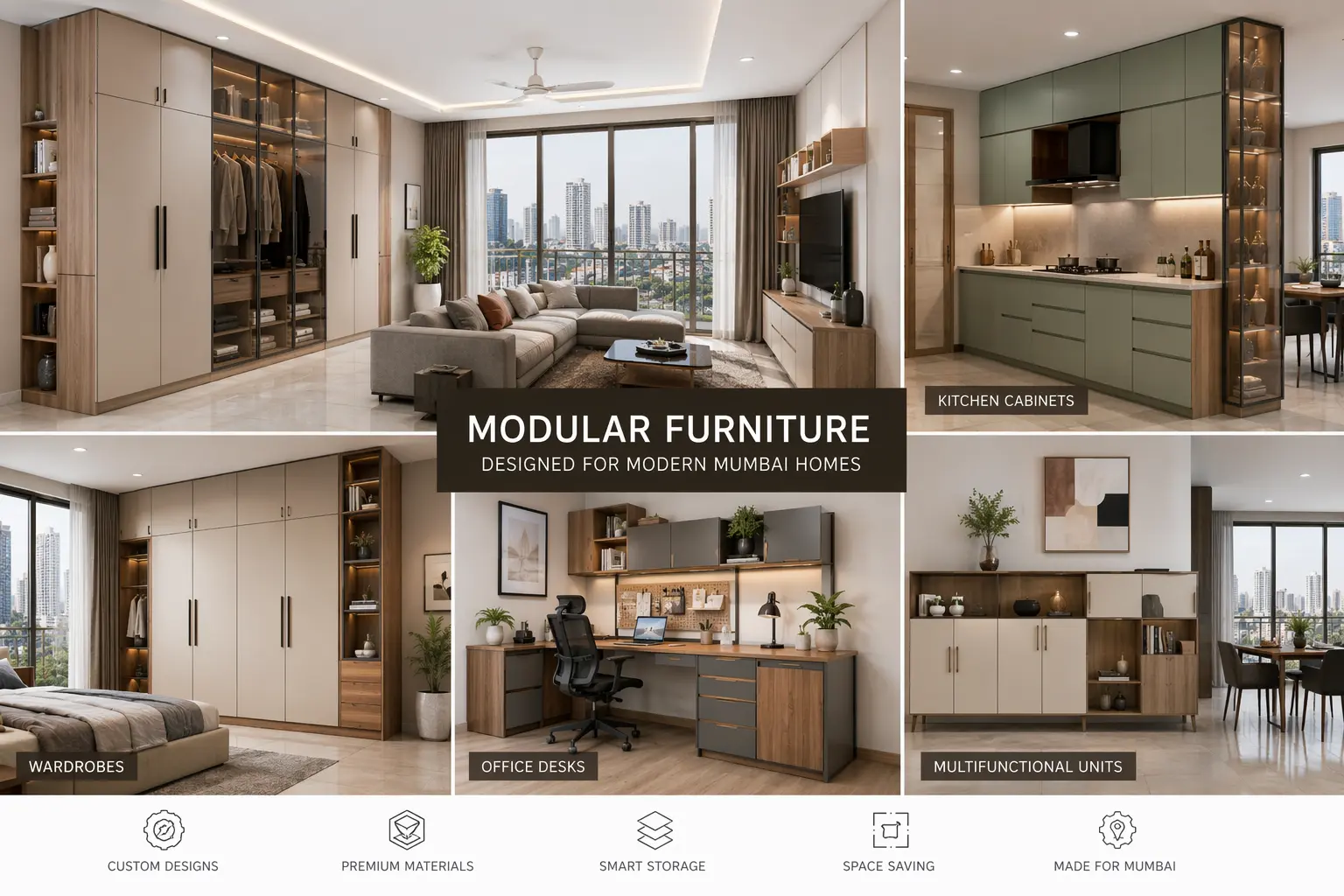
Smart wardrobe design can turn your cramped bedroom into an organized, clutter-free space. Small bedrooms in Indian apartments often lack adequate storage, forcing you to compromise on comfort and esthetics.
The solution? A well-planned modular wardrobe for small bedroom layouts that maximizes every inch of available space. In fact, a modular wardrobe for bedroom use offers customizable storage solutions tailored to your specific needs.
This guide walks you through five essential steps to plan the perfect modular wardrobe for small bedroom India homes, from measuring your space to professional installation.
Step 1: Measure Your Bedroom and Assess Available Space
Accurate measurements form the foundation of successful modular wardrobe design. Before selecting any wardrobe type or internal layout, gather essential tools: a laser measure, spirit level, stud finder, and notepad for documentation.
Record Wall Dimensions and Ceiling Height
Walls in Indian homes rarely run perfectly straight, particularly in older properties where wall deviations can exceed 20mm across typical bedroom widths. Measure wall width at three different heights: floor level, mid-height, and near the ceiling. Record the smallest measurement, since this determines the maximum wardrobe width you can install.
Standard ceiling heights in newer constructions typically reach 2.4m, while older properties may measure 2.3m. However, never assume standard dimensions. Measure your specific room’s height at multiple points along the wall, since ceilings can slope or vary. Loft conversions show the most dramatic height variations, where failing to document these differences causes wardrobes to exceed available headroom.
Account for ceiling fixtures, picture rails, or coving that reduce usable height. Skirting board depth also affects wall-to-wall measurements, which many homeowners overlook during initial planning.
Check Door Swing Clearances and Window Positions
Door swing paths require careful measurement for both bedroom entry and wardrobe doors. Hinged wardrobe doors need 300mm of clearance space to open fully. Mark the complete swing arc on your floor plan rather than just measuring door width.
A two-door swing wardrobe needs a minimum wall length of 800mm, while sliding door designs require at least 6 feet of wall space. Subsequently, maintain at least 60cm between the wardrobe and any beds or furniture for comfortable movement. This spacing allows you to walk past easily and access the wardrobe without squeezing.
Measure window positions relative to the floor and adjacent walls. Note radiator protrusion, which reduces available depth for wardrobe installation. Overlooking these obstacles during measurement leads to installation conflicts later.
Identify Corner and Dead Spaces
Corner areas and awkward alcoves often go unused in small bedrooms. Document alcove dimensions, chimney breasts, and any recesses that could accommodate built-in wardrobe sections. Record the depth available from the wall outward, considering how far the modular wardrobe can project into the room without blocking pathways.
For instance, L-shaped corner layouts can transform previously wasted floor area into functional storage. Measure both walls that form the corner, noting any irregularities where the walls meet.
Note Electrical Switches and Socket Locations
Document precise positions of all electrical outlets relative to the floor and adjacent walls. Bedrooms typically require outlets on every wall, with specific placements beside beds for device charging. Failing to map socket locations leads to wardrobes covering outlets, which violates electrical safety accessibility requirements.
Some modular wardrobe designs include internal outlets for irons and clothing steamers. Mark these requirements during measurement if you plan such features. Record light switch positions as well, ensuring your wardrobe placement allows easy access.
Measure delivery access routes through doorways, hallways, and staircases. Record the narrowest point along this path, including door frames and any tight corners. This prevents delivery complications, since many large modular wardrobe components arrive flat-packed for easier transport.
Step 2: Choose the Right Wardrobe Type for Your Small Bedroom
Your measurements determine which modular wardrobe design suits your bedroom layout. Five primary wardrobe types serve small Indian bedrooms, each addressing specific space constraints and access requirements.
Sliding Door Wardrobes for Tight Spaces
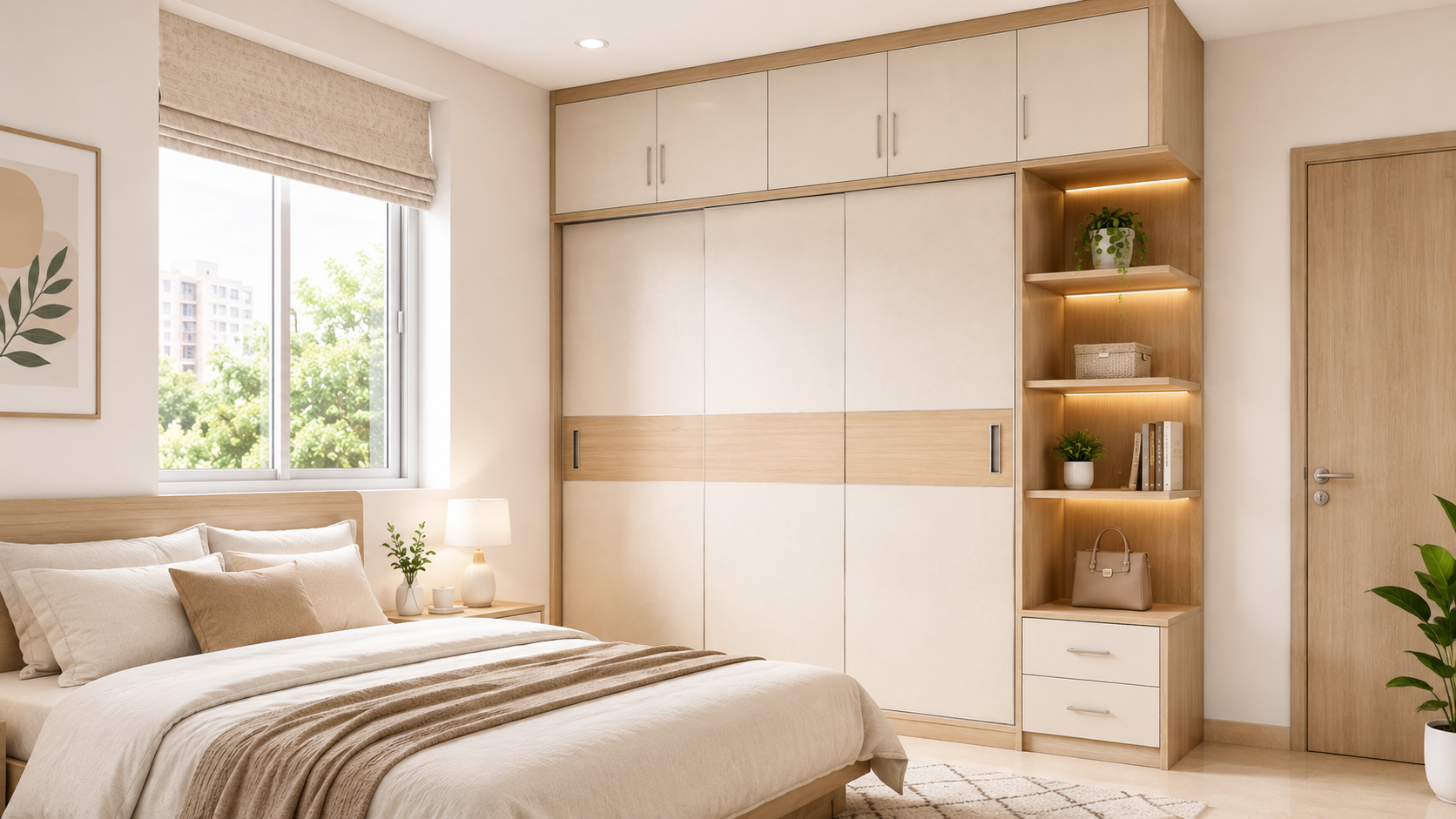
Sliding doors glide horizontally along metal tracks fixed to the wardrobe frame, eliminating the need for door swing clearance. Unlike hinged doors that open outward and consume floor space, sliding panels retract sideways without obstructing movement. This makes them beneficial for smaller rooms where minimal distance exists between beds and wardrobes.
Two-track sliding systems provide approximately 50% wardrobe accessibility at any given time, while three-track configurations allow around 66% access. This partial visibility represents the main trade-off, since you cannot view the entire wardrobe interior simultaneously. However, switching between sections remains quick and effortless.
Sliding wardrobes work best esthetically when designed with three or more panels. Mirrored sliding doors enhance brightness and create the illusion of expanded space, which proves particularly effective in compact Indian bedrooms. The tracks require occasional cleaning to prevent dust accumulation, and rollers may need periodic lubrication.
Hinged Door Wardrobes for Easy Access
Hinged wardrobes open fully on standard hinges, providing unobstructed access to the entire interior at once. This complete visibility simplifies clothing organization and selection. Hinged doors also accommodate internal accessories like pull-out racks and drawers that extend outward without obstruction.
The primary constraint involves clearance requirements. Hinged wardrobe doors need at least 60cm of clear space to open fully. For small bedrooms, this limits furniture placement and may create accessibility issues. Hinged mechanisms prove simpler to maintain compared to sliding tracks, with hinges being more durable and easier to replace when needed.
Floor-to-Ceiling Designs to Maximize Vertical Storage
Floor-to-ceiling wardrobes utilize full room height, eliminating gaps and wasted space above standard units. These designs add substantial storage capacity without consuming additional floor space, which proves ideal for compact Indian bedrooms. The seamless appearance creates an architectural, built-in look rather than appearing as standalone furniture.
Vertical designs accommodate seasonal clothing, bulky bedding, and infrequently used items in upper sections. Both sliding and hinged door configurations work with floor-to-ceiling heights. Sliding mechanisms suit bedrooms lacking clearance space, while hinged doors provide full interior access. Lighter finishes or mirror panels prevent the tall structure from making small rooms feel cramped.
Built-in vs Freestanding Modular Options
Built-in wardrobes are custom-made to fit specific wall dimensions, often extending floor-to-ceiling. They maximize space efficiency by fitting into any nook or corner, which suits rooms with awkward layouts. Built-ins create a permanent fixture that increases property resale value but lack relocation flexibility.
Freestanding wardrobes offer versatility through easy repositioning. They typically cost less upfront and require no professional installation. This makes them practical for renters or those anticipating future moves. However, freestanding units cannot match the space optimization of custom built-ins in small bedrooms.
L-Shaped Corner Wardrobes for Awkward Layouts
L-shaped corner wardrobes transform unused corner areas into functional storage by extending along two perpendicular walls. This design provides significantly more capacity than standard rectangular wardrobes within a similar footprint. Corner units create continuous storage lines that appear integrated with room architecture rather than placed against walls.
The deep corner section accommodates corner carousels or swing-out racks for easy access to items stored at the back. L-shaped designs with sliding doors prove particularly effective for maximizing space in smaller rooms.
Step 3: Plan Your Internal Storage Layout
Wardrobe interior planning begins with understanding your clothing habits and storage needs. Prior to selecting components, assess what you own: the ratio of hanging garments to folded items, the presence of long dresses or coats, and accessories requiring dedicated spaces. This behavior-based approach prevents wasted space and ensures your modular wardrobe for small bedroom layouts functions efficiently.
Calculate Hanging Space for Different Garment Types
Hanging capacity depends on pole space per garment and rod length. Shirts and blouses require 1 inch of pole space each, while dresses need 2-6 inches depending on style. Coats consume 3-4 inches per item. For vertical clearance, dress shirts need 33-39 inches, standard women’s dresses require 68 inches, and formal gowns extend 70-78 inches.
Double-rod configurations maximize vertical space in modular wardrobe for bedroom designs. Position the upper rod at 80-82 inches and lower rod at 40-42 inches from the floor. This arrangement accommodates short-hang items below while utilizing upper zones effectively. Allow 36 inches minimum between rods for proper garment clearance.
Add Shelves for Folded Clothes and Accessories
Folded clothing occupies approximately 14 inches deep by 12 inches wide. Standard shelf depth should measure 14 inches, with widths expanding in one-foot increments. This prevents wasted space while maintaining organized stacks. Sweaters typically require 18 by 12 by 2 inches per item, while laundered shirts need 12 inches wide by 17-22 inches long.
Shelf placement should reflect usage frequency. Position frequently accessed items at eye level, reserving higher shelves for seasonal or occasional-use clothing.
Include Pull-Out Drawers for Small Items
Drawers organize undergarments, socks, nightwear, and delicate items that wrinkle easily when hung. Pull-out mechanisms provide full visibility and dust protection compared to open shelving. Drawer organizers with compartments separate casual, formal, and party-wear clothing efficiently. Internal dividers keep jewelry, office documents, and small accessories neatly arranged.
Plan Shoe Racks and Bag Storage Sections
Shoes require 12 inches width by 12 inches depth and 4 inches height per pair. Pull-out shoe racks with raised front lips prevent pairs from sliding while allowing clear visibility when extended. Angled shelving or dedicated shoe compartments keep footwear organized without cluttering wardrobe floors. Likewise, reserve shelf sections for handbags, with dimensions accommodating various bag sizes.
Reserve Loft Space for Seasonal Storage
Upper wardrobe sections store bulky, infrequently accessed items like suitcases, bedding, and off-season clothing. Vacuum-sealed bags compress winter wear and free prime storage for daily garments. Label containers clearly by season and item type for quick identification during rotation periods.
Add Specialized Organizers for Belts and Ties
Pull-out organizers with non-slip elements hold belts and ties without tangling. Premium units accommodate up to 5 belts and 7 ties, plus accessory trays for watches and cufflinks. These specialized components require minimum 515mm carcass depth. Mount organizers on telescopic runners for smooth extension and easy access within your modular wardrobe design.
Step 4: Select Materials, Finishes, and Hardware
Material selection determines your wardrobe’s longevity and performance in Indian climate conditions. The right combination of core materials, surface finishes, and hardware mechanisms ensures your modular wardrobe for bedroom use withstands daily wear while maintaining esthetic appeal.
Choose Between Plywood and Engineered Wood
Plywood consists of thin wooden veneer layers bonded in alternating grain directions, creating superior strength for heavy furniture and structural applications. The cross-grain construction resists moisture damage, making it suitable for humid Indian climates. Plywood furniture lasts 15-30 years with proper maintenance, and can be refinished or sanded to restore original quality without full replacement.
Engineered wood binds wood fibers, chips, and particles with adhesives under high pressure. MDF and particle board typically last 5-10 years, while higher-grade HDF extends to 10-20 years. Engineered wood costs less than plywood and provides smooth surfaces ideal for painted finishes. However, it cannot be refinished once damaged and shows less resistance to moisture.
Select plywood for wardrobes bearing heavy loads or in moisture-prone areas. Choose engineered wood when budget constraints exist and the wardrobe receives lighter daily use.
Pick Light-Colored Laminates for Small Rooms
Light-colored laminates reflect light and create the impression of open space in compact bedrooms. Whites, pastels, and light grays make smaller bedrooms appear larger and airier. Glossy laminates mirror light and enhance brightness in modern bedroom designs.
Laminate sheets resist scratches and stains while maintaining long-lasting shine. They offer numerous design possibilities through various colors, patterns, textures, and finishes. For small bedrooms, light or glossy laminates produce a spacious effect.
Select Soft-Close Hinges and Sliding Mechanisms
Soft-close mechanisms catch doors in the final centimeters and gently guide them to closed position, preventing slamming. This reduces stress on surrounding door frames and prevents finger traps. The mechanism suits doors up to 80kg in weight and can be installed on closing side, opening side, or both.
Soft-close hardware includes mounting brackets, screws, and necessary installation components. Select mechanisms manufactured with durable materials for long-lasting performance.
Add Mirrors to Create Illusion of Space
Mirror panels create depth illusion through reflection, effectively doubling perceived bedroom size. The visual effect makes compact spaces appear more open and airy. Mirrored wardrobes serve dual functions as storage and full-length mirrors, eliminating the need for separate dressing furniture.
High-quality laminate backing ensures easy maintenance and cleaning. Mirrors prove particularly effective in small bedrooms where floor space limitations prevent additional furniture placement.
Step 5: Finalize Design and Arrange Professional Installation
Production begins only after you approve the final design visualization. A 3D render shows your wardrobe from multiple angles with actual finishes, handle styles, and proportions visible in your bedroom context. It reveals design problems before manufacturing begins, when fixing them costs nothing. Without 3D visualization, you rely on imagination, which frequently misses details that matter.
Review 3D Design Renders Before Production
Floor plan sketches show dimensions but not how the wardrobe looks in your room or whether it overwhelms the space. The render displays shutter panel proportions relative to walls and reveals awkward gaps before production. If your modular wardrobe design includes matching furniture, the 3D render shows how all pieces relate to each other.
Confirm Delivery Timeline and Installation Process
Expect 4 to 12 weeks from deposit to installation, depending on products selected and current demand. A 50% deposit confirms your order and schedules your installation date. Your space must be ready before the installer arrives, with flooring laid and the room in finished state. Installation typically completes in one day for standard wardrobes. Final payment becomes due on installation day.
Ensure Proper Ventilation in Humid Indian Climate
Discreet ventilation grilles at top and bottom promote natural air circulation. Kickboard gaps prevent stagnant air buildup. Avoid positioning wardrobes flush against external walls, which increases condensation risk. LED lighting inside wardrobes discourages moisture accumulation through mild warmth.
Plan Regular Maintenance and Hardware Checks
Inspect chrome hanging rods and shelves for bowing exceeding 1/4 inch. Apply silicone-based lubricant to ball-bearing drawer slides and sliding door tracks for frictionless operation.
Conclusion
You now have everything needed to design a functional modular wardrobe for your small bedroom. From accurate measurements to professional installation, each step builds toward maximizing storage without compromising space.
As shown above, the right wardrobe type combined with smart internal planning transforms cramped bedrooms into organized sanctuaries. Whether you choose sliding doors for tight spaces or L-shaped designs for awkward corners, your choices should reflect your specific storage needs.
Start implementing these steps today. Measure your space, assess your clothing habits, and select materials suited to Indian climates. Your small bedroom deserves storage solutions that actually work.